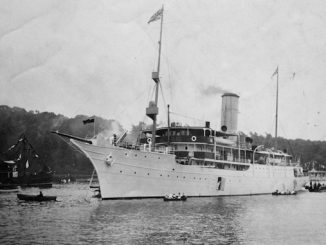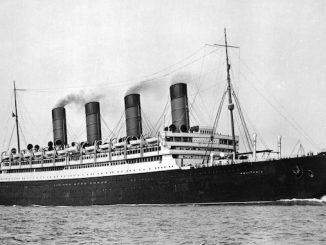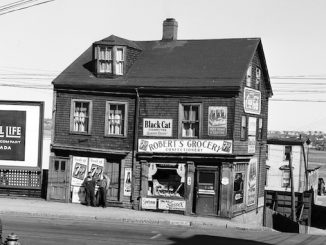
On the morning of December 6, 1917, Halifax awoke to what seemed like an ordinary winter day. The city was a vital wartime port, bustling with military activity as the First World War raged across Europe. Ships carrying troops, supplies, and munitions crowded Halifax Harbour, which had become one of the most important transportation hubs in the Allied war effort.
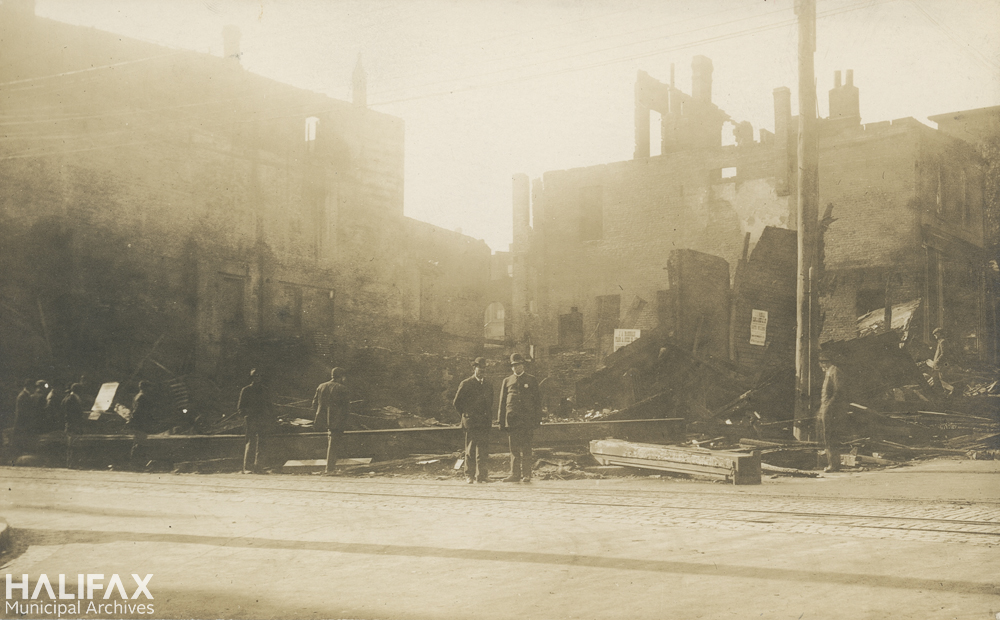
Within hours, Halifax would experience a catastrophe unlike anything in Canadian history.
The Halifax Explosion remains one of the deadliest disasters ever to occur in Canada and was the largest human-made explosion in history before the development of atomic weapons. Nearly 2,000 people were killed, approximately 9,000 were injured, and entire neighbourhoods were reduced to rubble in a matter of seconds.
A Harbour Filled With War Traffic
By late 1917, Halifax had become a crucial gathering point for transatlantic convoys. Merchant vessels carrying troops, food, fuel, and ammunition assembled in the harbour before crossing the Atlantic under naval escort.
Among the ships entering Halifax Harbour on the evening of December 5 was the French cargo vessel SS Mont-Blanc. The ship carried an extraordinarily dangerous cargo destined for the Allied war effort in Europe. Packed into its holds were thousands of tonnes of explosive materials, including picric acid, TNT, guncotton, and highly flammable benzol fuel.
![1917-Olands Breweries [sic], Army & Navy Brewery owned by the Oland family-Halifax Municipal Archives (HMA)-CR6-123.7](https://halifaxguardian.com/wp-content/uploads/2026/06/1917-Olands-Breweries-sic-Army-Navy-Brewery-owned-by-the-Oland-family-Halifax-Municipal-Archives-HMA-CR6-123.7.jpg)
Because of the threat posed by German submarines during wartime, ships carrying explosives often avoided displaying warning flags that would normally identify dangerous cargo. As a result, most people in Halifax had no idea of the danger floating in their harbour.
The following morning, the Mont-Blanc was making its way toward Bedford Basin when it encountered the Norwegian vessel SS Imo, which was leaving the harbour carrying relief supplies. A series of navigational misunderstandings and manoeuvres brought the two ships onto a collision course.
Shortly before 9:00 a.m., the vessels collided in the Narrows.
Fire on the Mont-Blanc
The impact itself was relatively minor. However, it proved catastrophic.
The collision toppled containers of benzol stored on the Mont-Blanc’s deck. Fuel spilled across the ship and ignited, creating a rapidly spreading fire. Crew members immediately recognized the danger.
Knowing the vessel’s cargo could explode at any moment, the Mont-Blanc’s crew abandoned ship and desperately attempted to warn others. Yet few people understood the magnitude of the threat.
As the burning vessel drifted toward Halifax’s Richmond district, residents gathered at windows, waterfronts, and streets to watch the dramatic fire. Firefighters rushed toward the scene. Harbour workers, railway employees, and curious citizens moved closer rather than farther away.
The city had no warning system capable of communicating the danger.
At approximately 9:04 a.m., the Mont-Blanc exploded.
The Blast That Destroyed a City
The explosion unleashed energy equivalent to roughly 2.9 kilotons of TNT. The ship was obliterated instantly.
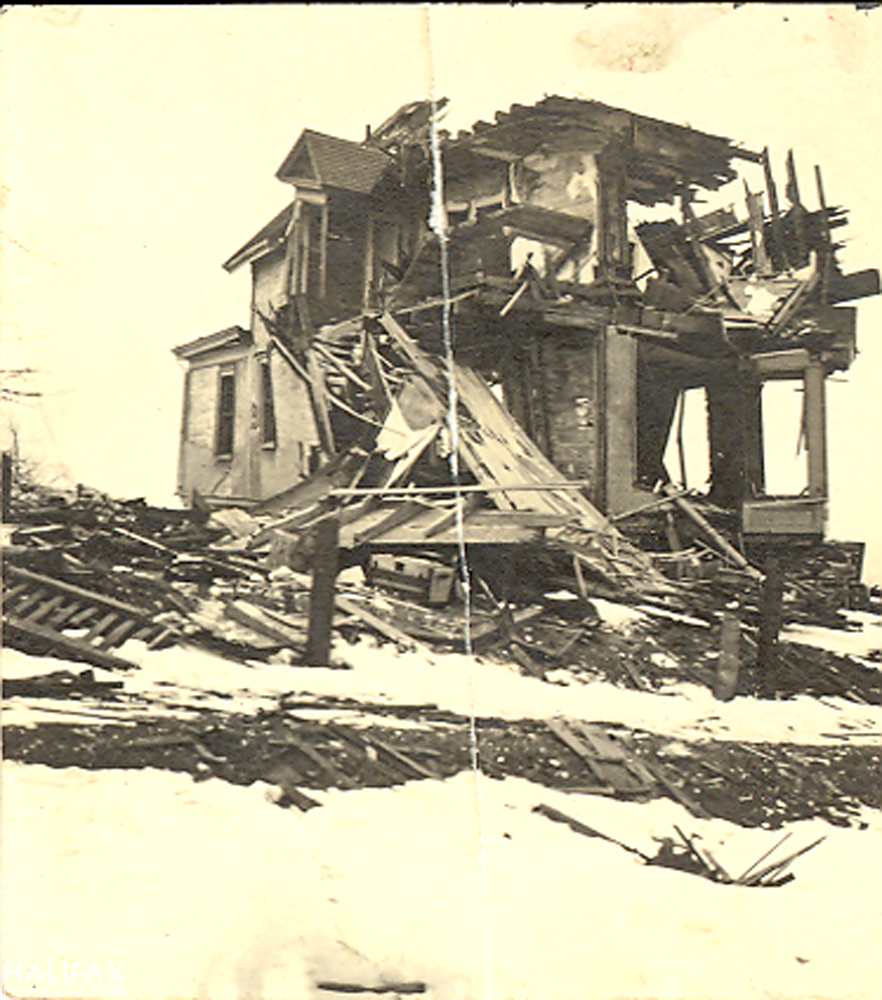
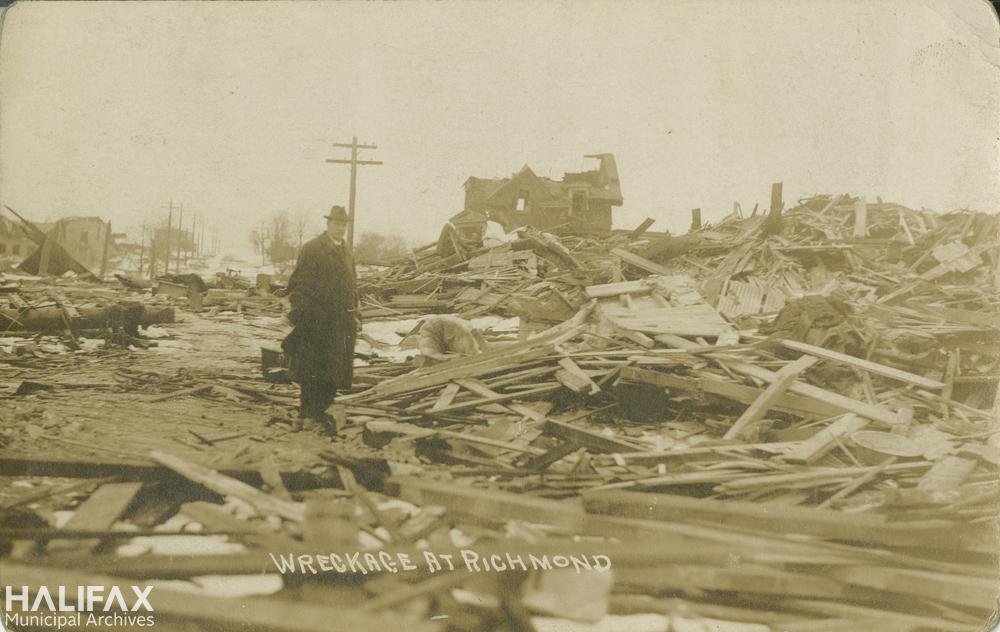
A massive shockwave raced across Halifax Harbour. Buildings collapsed. Windows shattered throughout the city and beyond. Entire streets disappeared beneath debris. Fragments of the Mont-Blanc were hurled for kilometres, with pieces of the vessel landing far from the harbour.
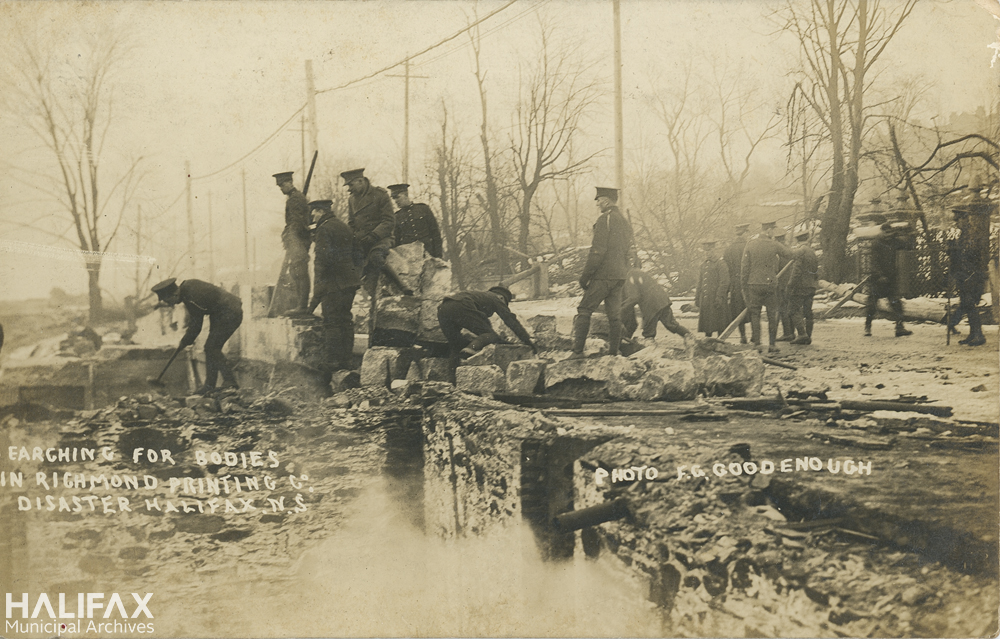
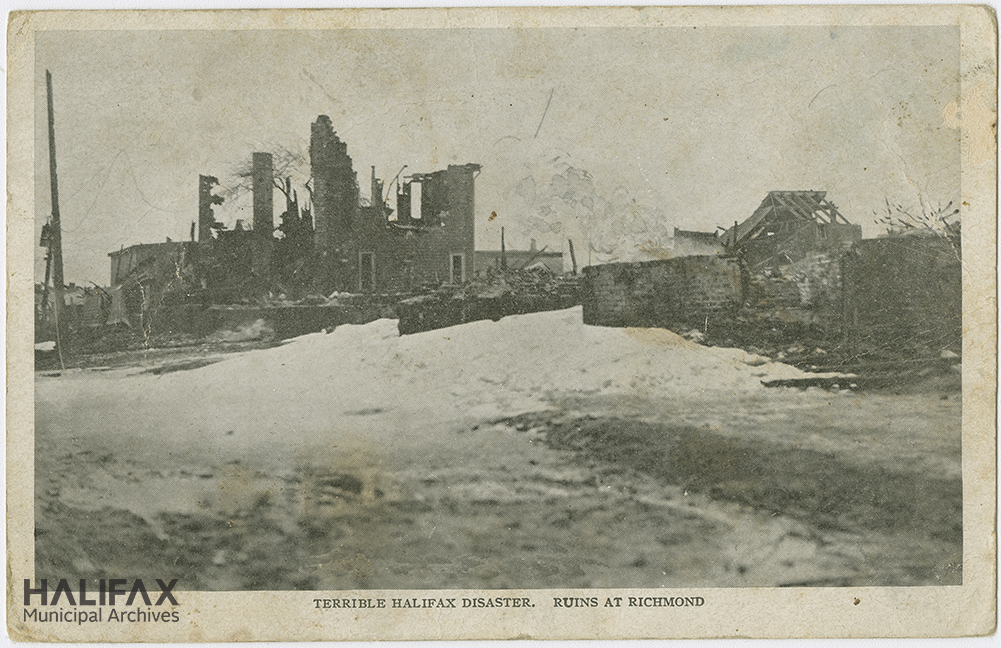
The explosion devastated more than a square mile of Halifax and destroyed approximately 1,600 buildings. Thousands more structures suffered severe damage. Entire sections of Richmond, located closest to the blast, were virtually erased from the map.
The force of the explosion created a tsunami that surged through the harbour and onto shorelines. Water swept away wharves, boats, and buildings along the waterfront. The Norwegian vessel Imo was lifted and thrown ashore by the wave.
The shockwave was felt for hundreds of kilometres. Witnesses reported hearing the blast as far away as Prince Edward Island and parts of New Brunswick.
For many survivors, the greatest danger came not from the explosion itself but from flying glass. As residents watched the burning ship from their windows, the blast shattered glass across the city. Thousands suffered severe cuts and eye injuries. Halifax hospitals would later record one of the largest mass-casualty events involving eye trauma ever documented.
Human Loss on an Unimaginable Scale
The exact death toll may never be known.
The Nova Scotia Archives’ official remembrance records identify 1,782 victims, though historians generally agree that the final number was likely higher. Many victims were never identified, while others died from injuries in the weeks and months that followed.
Approximately 9,000 people were injured.
Around 6,000 residents were left homeless, and as many as 25,000 people lacked adequate shelter during the harsh winter that followed. Entire families disappeared. Schools, churches, factories, businesses, and homes were destroyed.
The explosion also devastated Halifax’s industrial sector. Dockyards, rail infrastructure, and waterfront facilities suffered extensive damage at a time when Canada was deeply engaged in the First World War.
Heroes Amid the Chaos
Stories of extraordinary courage emerged from the devastation.
Among the most famous is railway dispatcher Vince Coleman. Working at the Richmond railway station, Coleman learned that the burning Mont-Blanc was likely to explode. Rather than flee, he remained at his telegraph key and sent warnings to incoming trains.
His final message reportedly instructed operators to stop approaching trains because an ammunition ship was on fire in the harbour and might explode.
Coleman died in the blast but is credited with helping save hundreds of passengers and railway workers who otherwise would have entered the danger zone.
Firefighters also paid a terrible price. Members of the Halifax Fire Department were among the first responders to reach Pier 6 after reports of the shipboard fire. Eight firefighters were killed when the explosion occurred.
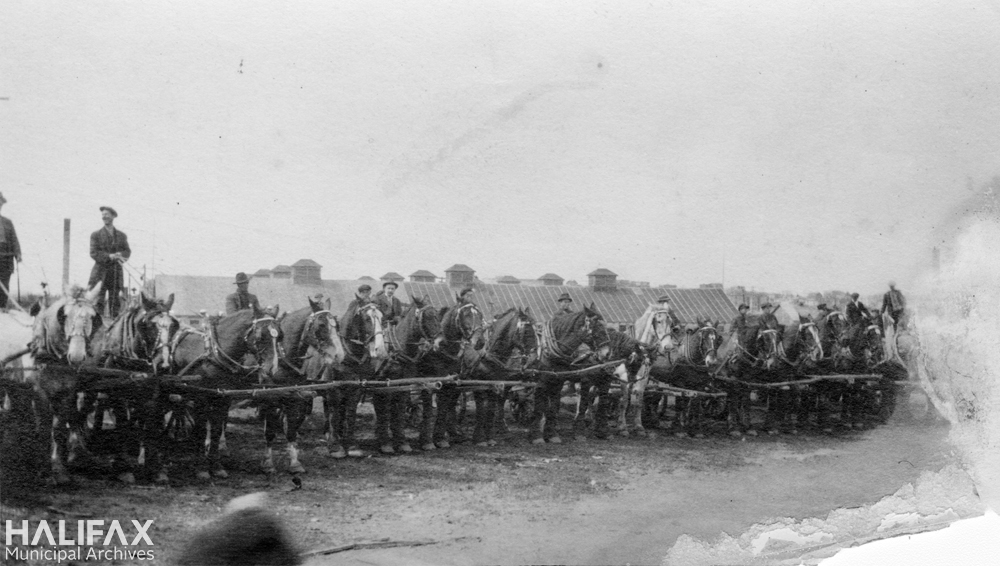
Police officers, doctors, nurses, soldiers, clergy, and ordinary citizens worked tirelessly throughout the day and night to rescue survivors trapped beneath debris.
Relief Efforts and Boston’s Response
The scale of destruction overwhelmed Halifax almost immediately.
Hospitals filled beyond capacity. Temporary morgues were established. Municipal leaders gathered in the damaged City Hall to coordinate rescue operations and relief efforts.
Help arrived from across Canada and the United States.
One of the most significant responses came from Boston, Massachusetts. Despite severe winter weather, Boston quickly organized medical teams, supplies, and emergency assistance for Halifax. Doctors, nurses, and relief workers travelled north to aid the city’s recovery.
The generosity shown by Boston created a lasting bond between the two cities. Today, Nova Scotia continues the tradition of donating a Christmas tree to Boston each year as a gesture of gratitude and remembrance.
Rebuilding Halifax
Recovery from the explosion took years.
The federal government established the Halifax Relief Commission to oversee reconstruction and compensation efforts. Entire neighbourhoods were redesigned and rebuilt. New housing developments replaced destroyed communities, while planners incorporated improved building standards and urban design principles.
The disaster also contributed to advances in emergency medicine, public health, social welfare programs, and disaster management practices in Canada.
Maritime regulations evolved as authorities sought to improve harbour traffic control and reduce the risks associated with transporting hazardous cargo. The tragedy became an important case study in disaster response and urban recovery.
Remembering the Halifax Explosion
More than a century later, the Halifax Explosion remains a defining event in the city’s history.
Memorials throughout Halifax honour the victims, survivors, and first responders. Every December 6, ceremonies are held to mark the anniversary of the disaster and remember those who lost their lives.
The explosion transformed Halifax physically, socially, and emotionally. Yet it also revealed the resilience of a community that rebuilt itself in the face of overwhelming loss.
The story of the Halifax Explosion is not only a story of destruction. It is also a story of courage, sacrifice, generosity, and recovery. From the firefighters who rushed toward danger, to the railway dispatcher who gave his life warning others, to the volunteers and medical workers who aided the wounded, the disaster produced countless examples of humanity at its best during one of Canada’s darkest moments.
More than 100 years later, the lessons of December 6, 1917 continue to resonate, reminding us how quickly tragedy can strike—and how communities can endure, rebuild, and remember.